
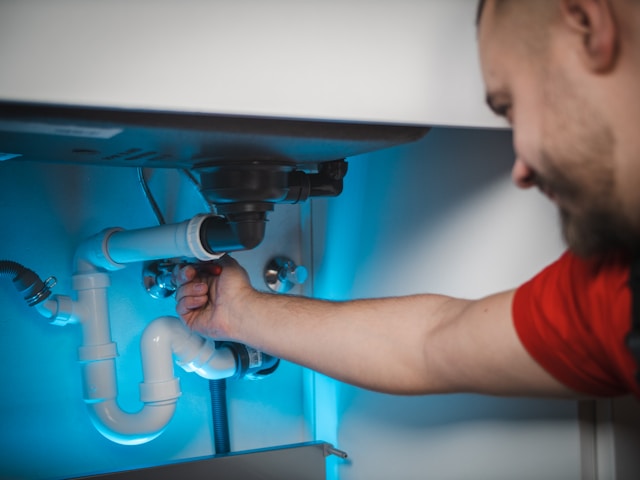
A well-designed and maintained plumbing line is basically an invisible infrastructure. That makes it is easy to take it for granted. You turn on a tap, water arrives. You flush, everything disappears. The walls stay dry, the floors stay quiet, and nobody gives the pipes a second thought. That quietness is not accidental, though. Behind it is a series of decisions that determine whether a plumbing system remains dependable years after the tools have been packed away. But the catch is, in that quietness, the damage can be loud.
1. Stability and Leak Protection Are About Value Protection and the Future
A good plumbing is not measured simply by whether it delivers to the end user. It must also consider efficiency, resilience, and potential disturbances in homes. That means a pipe can carry water to your tap and still be poorly installed.
For example, pipes can deliver water but vibrate and make a disturbing knocking, even to adjacent rooms. This is why an experienced emergency plumber beyond visible connections. They consider how the entire installation will behave once the house returns to normal life. They check how valves behave and possibility of air locks in your system.
That may mean:
- Securing pipework against unnecessary movement;
- Protecting pipes where they pass through structures;
- Sealing appropriate penetrations;
- Checking joints for signs of stress or leakage;
- Making future inspection and maintenance practical.
A particularly good installation is often one you never notice. No mysterious damp patch. No unexplained knocking behind the wall. No recurring leak that keeps bringing the plumber back.
2. Get the Gradient Right and Let Gravity Do Its Job
Drainage rarely needs to announce itself when it has been designed properly. Wastewater should move naturally through the system, and that depends heavily on having the appropriate gradient. Get the fall wrong and the symptoms may not appear immediately. Miscalculate that slope by even a fraction, and the system might play nice for a few months, right up until the slow drains, sour odors, and sudden backups start making guest appearances.
Clearing the blockage repeatedly may provide temporary relief without addressing the installation problem underneath. This is where professional workmanship separates itself from simply joining pipes together. A skilled plumber considers:
- The required fall for the particular drainage application
- Pipe diameter and expected flow
- The length and route of the drainage run
- Access points for future maintenance.
The objective is simple: create a drainage path that works with gravity instead of constantly fighting it.
3. Angles and Joints Can Decide How Well a System Ages
A plumbing layout can look perfectly acceptable when the work is finished and still create headaches later. The problem may be hidden in the way the pipe changes direction.
For example, a short and sharp 90-degree elbow onto a line slows down flow, makes water to spin instead, and makes debris to build up. However, using a pair of smooth 45-degree, one after the other, keeps the flow moving and makes running a drain cable down the line infinitely easier later on.
But good plumbing is less about rigidly following a playbook and more about anticipating physics. Water needs a clear, effortless runway.
An experienced plumber thinks about what happens after installation:
- Can water and waste move efficiently?
- Is there unnecessary turbulence?
- Can the section be accessed if something goes wrong?
- Are joints positioned and supported properly?
That forward thinking is what turns an installation into a functioning system rather than simply a finished job.
4. Give the Pipework Room to Move
Pipes are not completely static. Temperature changes can cause materials to expand and contract, while buildings themselves move subtly over time. Ground movement can introduce another set of stresses, particularly around underground services.
A rigid installation that leaves no allowance for movement may eventually develop noise, stressed joints or leaks. Professional plumbing therefore involves knowing where the system needs support and where it needs flexibility. Pipe clips, hangers, sleeves and appropriate expansion allowances all have a role, depending on the installation.
Consider a long hot-water run, for example. It may behave differently as temperatures change than a cold-water line. Likewise, a pipe passing through a wall should not simply be forced tightly against surrounding materials without considering movement and protection.
The goal is not to make every pipe immovable. It is to give the system controlled movement without allowing that movement to damage it.
In essence, professional plumbing is ultimately about securing a comfortable and fulfilling lifestyle around your water systems and drainage lines. When you schedule plumbing inspection, it’s not necessarily that you are under pressure, about a worthy an exercise in anticipation. However, emergencies do happen, whether it’s a pipe burst during winter or a sewerage backflow, and when it does, having a reliable plumber who can respond to emergencies with precision is key.